Marketing for a new restaurant should start two to five months before opening. In that window you need a name and identity people understand, a website with your menu, prices, hours and a way to book, photography of the food and the room, and an accurate Google listing. Get them done together, so the first impression holds up everywhere.
When should pre-opening marketing start?
We'd recommend two to five months before your opening date. That's early enough to make proper decisions about the brand, the website and the shoot, and late enough that the menu, the room and the team are taking shape.
Closer than that still works if you start with the essentials. You don't need a confirmed date to begin planning; an estimated window is enough.
One fixed point to plan around: Google lets you set up a pre-opening Business Profile, and it shows on Google 90 days before your opening date. That gives people somewhere to find you while the paper is still on the windows. (Source: Google Business Profile Help.)
What has to be ready by opening day?
Four things, and they need to tell the same story.
| What | Why it matters | Ready by |
|---|---|---|
| Name, identity and menu design | People decide what kind of place you are from the sign, the menu and the first photo they see | 6–8 weeks out |
| Website with menu, prices, hours and booking | It's where interest goes. If it can't answer "what's on, what does it cost, when are you open, can I book", people go elsewhere | 2–4 weeks out |
| Photography of the food, the room and the team | For the website, Google, press and social, all from one shoot | 4–6 weeks out |
| Google Business Profile, with hours that match your website | Most people check Google before they visit | Live 90 days out, final details by opening week |
What should a new restaurant website include?
The essentials are simple, and they're often the part that gets rushed.
- Your menu as text on the page, with prices. A PDF or a photo of the menu is harder to read on a phone and harder for search tools to pick up. When we checked 100 Notting Hill restaurants in September 2026, 56% of the 71 sites we could assess had a PDF, a photo or no menu at all, and 51% of 81 had no prices on the site. (Red Hills Lab W11 report, preliminary.)
- Opening hours that match Google. In the same check, 40% of 84 sites had hours flagged as different from their Google listing. Sometimes that's just kitchen hours versus door hours, but customers can't tell the difference.
- A clear way to book. One obvious button, tested on a phone, that goes to your booking system.
- Allergen information, or clear signposting to it. The Food Standards Agency sets out what restaurants have to provide.
- Where you are and how to get there, with the address written out in full.
- Photos that show the actual room and the actual food.
What photography do you need, and when?
Plan the main shoot four to six weeks before opening, so the photos are ready for the website, your Google listing and the press. Shoot the room once it's finished: furniture in, lighting set, the details done. Shoot the food once the dishes are locked, so you aren't photographing a menu that changes the week after. If the room isn't ready in time, shoot the food and the team first and the space as soon as it's done. You'll want:
- the space, empty and with people in it
- the signature dishes and drinks
- the team and the kitchen at work
- the small details that make the place what it is
One well-planned shoot can cover the website, the Google listing, opening press and the first few weeks of social.
Don't wait for the finished room: share the build
Your content doesn't have to be limited to the food and the finished space. The fit-out is one of the best stories you have, and most restaurants never tell it. Photograph and film the build as it happens, and share it week by week:
- the empty unit on the day you get the keys
- walls coming down, the kitchen going in, the sign going up
- the bar, the tables or a mural taking shape
- menu tastings and the team's first days together
- the countdown to opening
People love watching a place come to life. It gives them a reason to follow you months before you open, and it turns opening day into the moment they've been waiting for.
Soft launch or grand opening?
Most new restaurants do better with a soft launch first: a few quieter days or friends-and-family services to test the kitchen, the booking flow and the team before you invite the press and push hard on social. A bigger opening moment can follow once the basics run smoothly. Which one is right depends on your space, your team and your budget.
How do new restaurants show up in ChatGPT and Google's AI answers?
More people now ask ChatGPT or Google for a recommendation before they book. Those tools lean on the same basics customers do: a readable menu, prices, hours that agree everywhere, a way to book, and other people writing about you. Get the launch basics right and you're most of the way there. Nobody can guarantee a recommendation, and you should be wary of anyone who does.
An example: Oven District
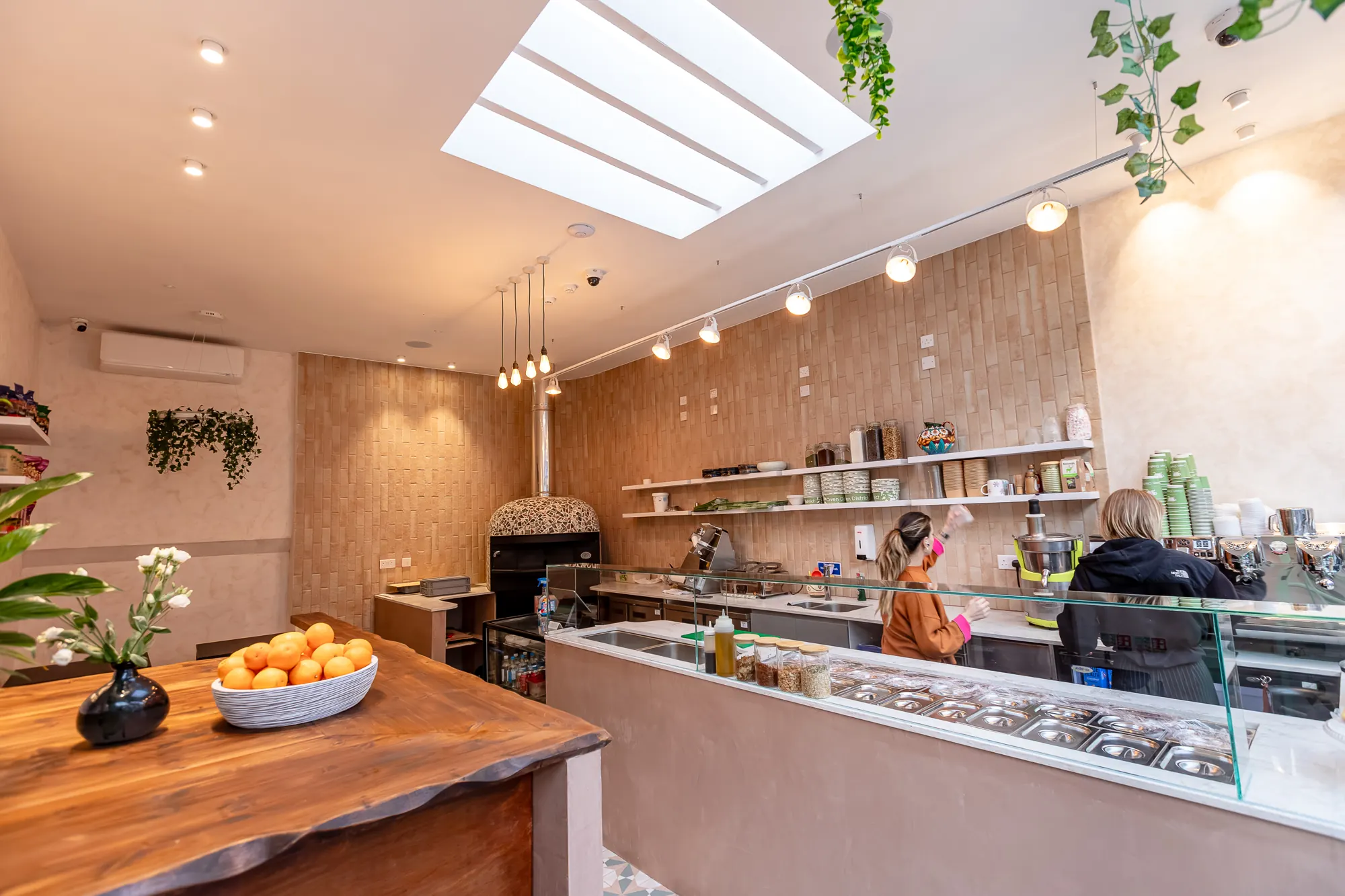
Oven District is a family-run Mediterranean kitchen. Before it opened, we worked alongside the founders on the menu design and launch materials, designed and built the website from scratch, and photographed the space, the food and the atmosphere. It opened ready to be found and booked. Read the Oven District story.
Questions people ask
How do I market a restaurant before it opens?
Get four things ready together: a clear name and identity, a website with your menu, prices, hours and booking, photography of the food and room, and a pre-opening Google profile. Then tell people with launch content and local press.
When should I start?
Two to five months before opening is ideal. Closer is workable if you start with the essentials.
Should my menu be a PDF?
Put the menu on the page as text with prices. Keep a PDF as an extra if you like.
When should I set up my Google Business Profile?
As soon as you have an address and an estimated date. Google shows a pre-opening profile 90 days before your opening date.
What should we post before we open?
The build. Share the fit-out, the kitchen going in, menu tastings and the team as you go, so people follow the story and are ready to visit on opening day.
Soft launch or grand opening?
Usually a soft launch first, to test the kitchen and bookings, then a bigger moment once things run smoothly.